
Understanding Focal Behavior Arrest Seizure: Here is Bob
Focal behavior arrest seizures are a form of epilepsy that often go unnoticed, not because they are rare, but because they are quiet. There is no dramatic fall, no shaking, and sometimes no obvious warning. Instead, a person simply stops. Movement pauses. Speech halts. For a moment, the world continues around them while they are unable to engage with it. These seizures are frequently misunderstood as daydreaming, inattention, or confusion, leading to delayed diagnosis and unnecessary frustration. This blog explores what focal behavior arrest seizures are, how they differ from other seizure types, and what it is like to live with them, through the story of Bob.
Dr. Clotilda Chinyanya
12/2/20254 min read

Bob’s Story
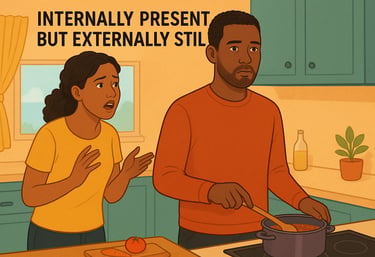
Bob had always been dependable. At 42, he was the kind of colleague who showed up early to meetings, took meticulous notes, and asked thoughtful questions. When Bob started “checking out” during conversations, people noticed. The first time it happened, he was standing in his kitchen, stirring a pot of soup while talking to his wife about their weekend plans. Mid-sentence, the spoon stopped moving. Bob froze, eyes fixed straight ahead. The stove hissed quietly. After about 20 seconds, he blinked, looked down, and resumed stirring as if nothing had happened.
“Are you okay?” his wife asked.
Bob nodded, genuinely confused. He remembered standing there, aware of the kitchen, the light, the smell of soup, but unable to move or respond. He hadn’t felt afraid. He hadn’t lost consciousness. He just… stopped.
Over the next few months, it happened again. And again. At work, Bob would suddenly pause while typing, hands hovering above the keyboard. During meetings, he would stare at the presenter, motionless, missing entire stretches of conversation. Once, while walking across a parking lot, he stopped mid-step, causing someone behind him to nearly bump into him.
People assumed stress. Or burnout. One coworker joked that Bob was “buffering.”
What no one could see was that Bob was fully there. He could hear voices. He could see faces. He knew time was passing. But his body would not move, and his ability to respond was temporarily switched off. It wasn’t until a neurologist asked a very specific question: “When these episodes happen, does everything stop?” Bob finally had an answer. He was experiencing focal behavior arrest seizures.
What Is a Focal Behavior Arrest Seizure?
A focal behavior arrest seizure is a type of focal non-motor seizure in which the dominant feature is a sudden, persistent cessation of ongoing activity. The person stops moving, stops speaking, and may stare blankly, appearing frozen or immobilized.
The word focal is critical. These seizures begin in a specific, localized area of one hemisphere of the brain, distinguishing them from generalized seizures such as absence seizures. For a seizure to be classified as a focal behavior arrest seizure, the arrest of behavior must:
Begin at seizure onset
Be the predominant feature
Persist throughout the entire seizure
Brief pauses or momentary freezing are common in many seizure types and even in everyday life. What defines focal behavior arrest seizures is the sustained and dominant nature of the immobility.
Awareness During Seizures
Focal behavior arrest seizures exist along a spectrum of awareness:
Focal aware behavior arrest seizures: Awareness is preserved throughout the episode. The person knows what is happening but cannot move or respond.
Focal impaired awareness behavior arrest seizures: Awareness is impaired at some point during the seizure.
If awareness becomes impaired at any time, the seizure is classified as a focal impaired awareness seizure. Bob’s experience fell into the first category. He was conscious, observant, and internally present, yet externally still.
What Focal Behavior Arrest Seizures Look Like
From the outside, these seizures can be subtle and easily misinterpreted. A person may:
Stop walking mid-step
Pause while speaking
Stare without blinking
Appear unresponsive to their name
Freeze during an activity such as eating, writing, or driving
Because there is no convulsion or dramatic movement, observers may assume the person is distracted, daydreaming, or intentionally ignoring them. This invisibility is one of the reasons focal behavior arrest seizures are often overlooked.
Associated Symptoms
Although behavior arrest is the defining feature, other symptoms may occur alongside it.
Non-Motor Symptoms
These can include:
Sudden changes in emotion
Altered sensations
Cognitive changes
Autonomic symptoms such as heart racing, goosebumps, waves of heat or cold, or gastrointestinal sensations
These symptoms reflect involvement of the autonomic nervous system, which regulates involuntary bodily functions.
Motor Features
While movement is arrested overall, some subtle motor features may still occur, such as:
Lip smacking or chewing movements
Blinking
Mumbling or grunting
Repetitive, purposeless movements known as automatisms
Importantly, the presence of fear at seizure onset matters. If fear is clearly identified by the person as the primary initial symptom and causes immobility, the seizure is classified differently as a focal emotional seizure with fear rather than a focal behavior arrest seizure.
How These Seizures Differ From Absence Seizures
One of the most common points of confusion is between focal behavior arrest seizures and absence seizures. While both involve pauses in activity, absence seizures are generalized seizures that typically begin in childhood and involve brief lapses in awareness lasting seconds. Focal behavior arrest seizures:
Originate in a specific brain region
May preserve awareness
Are often longer
Occur at any age
Correct classification is essential because it directly influences diagnosis and treatment planning.
Diagnosis
Diagnosing focal behavior arrest seizures requires careful clinical evaluation. Because these seizures are quiet and brief, detailed descriptions are crucial.
Diagnosis typically includes:
A thorough medical history
First-person descriptions of seizure onset
Witness accounts, when available
Electroencephalography (EEG) to assess brain activity
Brain imaging, such as MRI, to identify structural causes
Patients are often asked to describe not just what happened, but what happened first. This distinction determines how the seizure is classified.
Treatment and Management
Treatment usually begins with anti-seizure medications (also called anti-epilepsy drugs), which aim to reduce seizure frequency and severity. If seizures remain difficult to control, additional options may be considered, including:
Dietary therapies
Neuromodulation techniques
Surgical evaluation in carefully selected cases where the seizure focus can be precisely identified
For some individuals, focal behavior arrest seizures may be part of a broader neurological or genetic condition, making specialist evaluation important.
Living with Focal Behavior Arrest Seizures
For Bob, the diagnosis changed everything. Once he understood what was happening, he could explain it to his family and coworkers. The “buffering” jokes stopped. Meetings became more accommodating. His wife learned that his silence did not mean disengagement.
Living with focal behavior arrest seizures often requires education, both for the person affected and for those around them. These seizures challenge the assumption that awareness must look active, responsive, and verbal. They also remind us that epilepsy does not always announce itself loudly.
Why Awareness Matters
Misunderstanding focal behavior arrest seizures can lead to stigma, frustration, and self-doubt. People may be accused of not paying attention, of being rude, or of lacking motivation.
Recognizing these seizures as neurological events, not personal failures, creates space for empathy, timely diagnosis, and appropriate care.
Final Thoughts
Focal behavior arrest seizures show us that epilepsy can be still. That a person can be present yet unable to move. Aware, yet unable to respond. By increasing awareness of these quiet seizures, we help people like Bob be seen not as disengaged, but as navigating a complex neurological condition with resilience and strength.
Further Reading:
Choose Knowledge: