
For many years, epilepsy was a word surrounded by fear, stigma, myths, and misunderstanding in my life. Before I understood what was happening to me, other people had already decided what my seizures meant. Some said I was bewitched. Others believed I was possessed by evil spirits. At one point, I was even told that my late mother’s spirit was haunting me. While people searched for explanations, I was simply a frightened young girl trying to understand why I kept losing control of my own body.
“What epilepsy took from me cannot be measured only by seizures. It took away my confidence, my sense of belonging, my independence, and at times, my hope.”
Yet through all the pain, confusion, and setbacks, epilepsy also taught me resilience, courage, self-advocacy, and empathy for others facing similar battles. Today, I am no longer the scared little girl who suffered in silence. I am an epilepsy advocate, a support group founder, a student, a professional and a woman who has learned that a diagnosis does not define a person’s worth or limit their potential.
Noleen Munetsi — Epilepsy Advocate & Support Group Founder
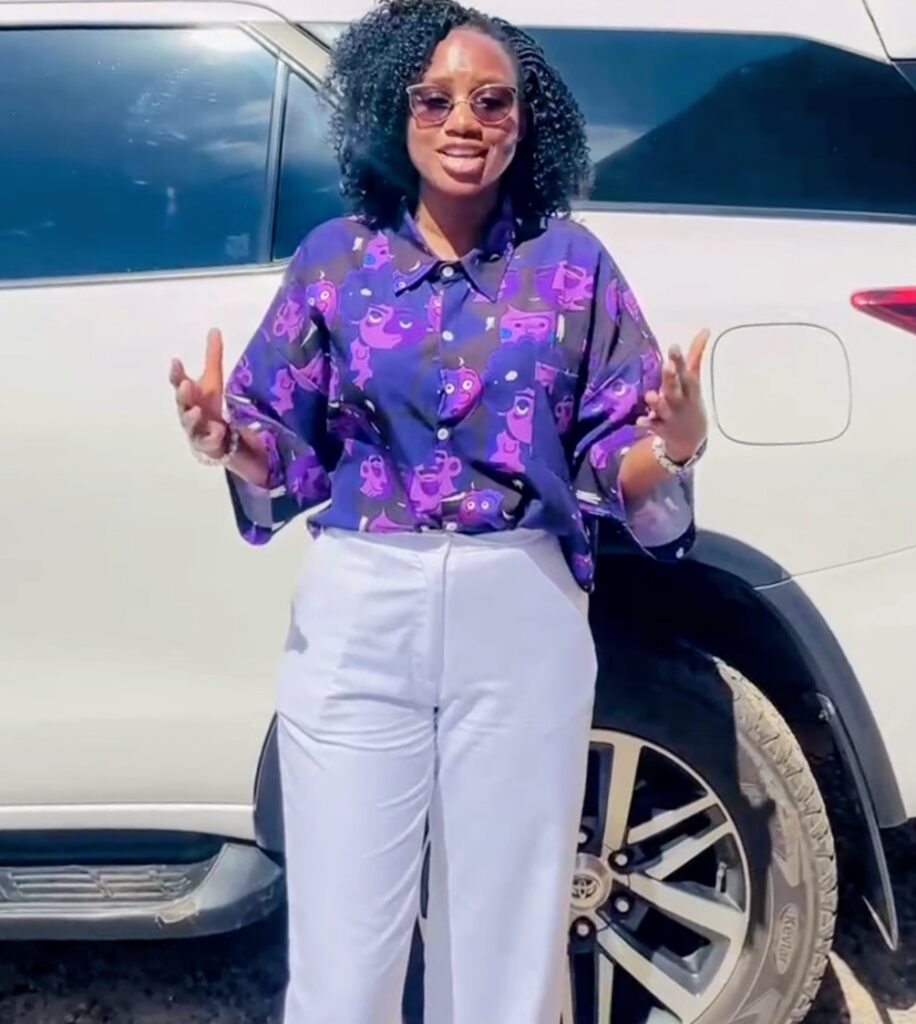
My Journey with Epilepsy — Noleen Munetsi
✦ This is my story
My name is Noleen Munetsi, and I was born in 1996. When I look back on my childhood, I see a sweet little girl, just like any other, unaware of what life had in store for me. I would sometimes stare blankly into space for a few seconds without realising it. I would stop talking in the middle of a sentence, become unresponsive, or experience involuntary movements. I paid little attention to these episodes and assumed they were normal.
Everything changed after my mother passed away in December 2006. I was only ten years old. The following year, I began experiencing tonic-clonic seizures, causing me to lose consciousness completely two or three times a week, both at home and at school. Today I know those earlier episodes were focal unaware seizures, but at the time, I had no idea what was happening to me.
✦ Stigma, fear and misunderstanding
My guardians initially sought help from faith healers and traditional healers. Each person had a different explanation. Some said it was an evil spirit. Others blamed witchcraft. The most painful and traumatic thing I heard was that my mother’s spirit was haunting me because she was not resting in peace and wanted to take me with her. As a frightened child, I believed much of what was being said about me.
At school, many students stopped associating with me because they believed epilepsy was contagious. I withdrew from my peers and spent much of my time alone, overwhelmed by stress and sadness. I cried often and silently carried a burden that few people understood. Eventually the school urged my guardians to seek medical help.
My aunt took me to a public hospital in Harare, where I underwent an EEG and was diagnosed with epilepsy. I was prescribed Phenobarbital, but when the one-month supply ran out, it was never refilled. Everyone assumed the condition had disappeared. It hadn’t. The seizures continued.
“I lost count of the herbal concoctions I drank, the rituals I participated in, and the sacrifices performed in an attempt to cure me. To this day, my hand remains permanently dislocated from repeated falls during seizures.”
As a teenager, my seizures began to follow a pattern linked to my menstrual cycle; years later I would learn this was catamenial epilepsy. I was also told my seizures were happening because I did not know my father, and that finding him would make everything stop. I found him. Nothing changed. Depression became a constant companion. I dreamed of becoming an air hostess or a lawyer, but epilepsy seemed to have stolen those dreams before I even had a chance to pursue them. I cried in private because I believed nobody would understand and nobody could help.
✦ Finding hope — Doctor G
As I grew older, I realised that epilepsy does not come with a roadmap. I would have to learn how to navigate life myself. That realisation led me to Doctor G. He was the first doctor who saw more than my seizures. He saw a young woman carrying years of emotional wounds, unanswered questions, grief, fear, and trauma. He listened. He explained. He educated. He encouraged. Most importantly, he helped me believe in myself again. Doctor G restarted me on Lamotrigine, which worked well until I developed allergic reactions. We then switched to Levetiracetam, a medication more suitable for me. Although my seizures did not disappear completely, my perspective changed. I learned to recognise my triggers, identify my warning signs, advocate for myself, and accept my reality. Acceptance did not mean I liked having epilepsy. It did not make seizures less painful or frightening. It simply meant acknowledging my condition and choosing to build a meaningful life despite it. That acceptance gave me hope for
tomorrow.
✦ Building a community
Because of everything I experienced: the stigma, isolation, misinformation, discrimination, and lack of support; I made a promise to myself that no other person with epilepsy should have to feel as alone as I once did. That promise led me to help establish a support group alongside Doctor G, and today it has
been running for approximately four years.
The group provides a safe space where people can share their experiences without fear of judgment, ask questions, find support, and remind one another that they are not alone. Together, we celebrate International Epilepsy Day, Purple Day, and Stripes Week. In 2024, I shared my story with the Epilepsy Alliance Africa during Stripes Week, and it was published to encourage others with epilepsy.
✦ A disability does not define my ability
Looking back, I am proud of how far I have come. I obtained a driver’s licence; something I once believed would never be possible. I work as a Sales and Marketing Executive. I first studied Supply Chain Management and am currently pursuing a Bachelor of Commerce in International Supply Chain
Management, majoring in Transport and Logistics.
Many people advised me to choose Procurement instead, believing my condition and Transport and Logistics were incompatible. Their doubts only strengthened my determination because I wanted to prove that a disability does not define a person’s ability.
“Epilepsy is not a life sentence. It is a medical condition that can often be managed and controlled with the right treatment, support, and understanding.”
I share my story today because I know there is someone reading this who is struggling to accept what life has handed them. Perhaps you are questioning why this happened to you. Perhaps you feel alone. If that is you, I hope my story finds you exactly when you need it and reminds you that your diagnosis is not the end of your story.
Every conversation creates awareness. Every act of awareness brings us closer to understanding. As long as I can, I will continue sharing my story, raising awareness, and standing proudly with my purple family.
Noleen Munetsi ■
Every conversation creates awareness • #PurpleDay • #EpilepsyAwareness
This blog is for educational purposes and does not replace medical advice. If you or someone you love experiences unexplained episodes like those described, consult a qualified healthcare professional for evaluation and care.
Thank you, Nonoe, for sharing your story with such honesty and courage. Reading your journey was both heartbreaking and inspiring.
What stood out most to me was not just the challenges you faced, but the resilience you showed in overcoming them. Your story reminds us that epilepsy is more than seizures. It can touch every aspect of a person’s life, from confidence and independence to relationships, education, employment, and mental well-being. Yet through it all, you refused to let your diagnosis define you.
I deeply admire your willingness to speak openly about your experiences. By sharing your journey, you are breaking down misconceptions, challenging stigma, and reassuring others living with epilepsy that they are not alone. Your words will resonate with many who see their own struggles reflected in your story and draw strength from your perseverance.
Thank you for transforming your challenges into a source of hope and encouragement for others. Your journey is a powerful testament to the fact that while epilepsy may be part of a person’s story, it does not determine their worth, their potential, or their future. Wishing you continued strength, good health, and every success in the chapters ahead. 💜 💜 💜
Thank you, Nonoe. Your story is a powerful reminder that strength is often built in the moments no one sees. I admire your resilience, your honesty, and your willingness to share both the struggles and the victories. Your voice matters, and I have no doubt it will encourage many others living with epilepsy. 💜
I realised sharing what I have gone through & still going through can create awareness, understanding, and acceptance and these can change lives. Thank you.
Thank you for sharing your story, Nonoe. What touched me most was not only what you endured, but the person you became through it. It takes immense courage to keep moving forward when life feels uncertain, and even more courage to share that journey with others.
Your story is a reminder that resilience is not about never struggling; it is about refusing to give up despite the struggles. Thank you for lending your voice to a conversation that so many still find difficult to have. I have no doubt your words will inspire hope in others who are walking a similar path. 💜 💟💜💟💜💟💜💟
Giving up seems like the easiest thing to do when life has handed you something you didn’t choose but sometimes in our greatest moments of despair is when we notice our purpose. Seizures are not something you get used to but you adapt & you make life style changes which are painful and difficult, the journey is not easy but where there’s a will theres always a way to help you get through. I hope this story is the support someone needs to them get through.
This is inspiring and I have learnt a lot. Keep up the good work Noelyn and I hope your story reaches thousands of people and they learn and are inspired as well
Thank you for sharing your journey. Your strength and resilience in the face of epilepsy are truly inspiring. Your story is a powerful reminder of the courage it takes to keep moving forward.
Thank you Vale . Honestly if you ask me I’ll definitely tell you there was also a time I didn’t even want to share my condition with anyone but what I went through over the years gave me enough courage to want to make the invisible disability visible any chance and any way I can.
Hie Anna . For sure jus having it help one person is an achievement for me, if it reaches a thousand then we are definitely a step closer to a stigma free world because of epilepsy.
Nonoe, thank you for sharing your story. Your unseen strength, honesty, and resilience with epilepsy really inspire me. Your voice matters, I’m sure it’ll encourage so many others too.
Thank you Nyasha. I’m glad some how my journey is an inspiration to you and others too.
Thank you for sharing your inspiring journey, Noleen. Your courage, resilience, and determination to transform your own struggles into hope for others are truly remarkable. I also admire your commitment to your education. Pursuing a Bachelor of Commerce in International Supply Chain Management while advocating for epilepsy awareness shows incredible strength and determination. Education is powerful, and your dedication to learning and growing is inspiring. Your story is a reminder that a diagnosis does not define a person’s potential. Wishing you continued success in your studies, your career, and your important work raising awareness and supporting others. Keep shining and changing lives. 💜
Hie Roy. Thanks for commenting, advocacy is a passion that came with lived experiences. Education is very important and most people with epilepsy find it difficult to live a normal life because of epilepsy, they don’t have the desire or hope to pursue anything in life because of what has been instilled in their minds because of epilepsy or because of the fear of judgement. Pursuing my career nomatter the memory losses and the side effects of medication was a way of showing epilepsy cannot steal away my ability to lead a normal life. Many with the condition find it hard to keep or lend a job not by choice but because of our society & it’s misconceptions. What makes it even more difficult on epilepsy is it’s an invisible disability. Still more disability is not inability & epilepsy cannot define & defeat me.
What a beautiful and hopeful story Nono.Thank you for showing that an epilepsy diagnosis is not the end of someone’s dreams. Your journey is proof that with courage, perseverance, and the right support, life can still be full of purpose, joy, and success. You’re giving hope to so many people who may be scared after their diagnosis, and that’s an incredible gift. Wishing you continued health, happiness, and many more achievements ahead… Keep shining superstar
Hie sis. Thank you for mentioning the right support. Emotional, moral & mental support is very crucial to someone with epilepsy ofwhich many people don’t know yet how to offer that. When epilepsy enters your life before the acceptance your mind is always a war zone because of the unpredictability & the what ifs . Noone can survive epilepsy and win without the right support system, many end up ending it all because of the lack of support. I hope God continues to grant me the strength to continue being a pillar of strength for others too.
Thank you for sharing your story so courageously. Your strength and honesty will inspire many people and help break the stigma around epilepsy. Wishing you continued strength and good health💯
Thank you Dylan . Stigma is what we continue to fight everyday and I hope one day it will only exist as a word & not as an experience.
Thank you for sharing your story so courageously. Your strength and honesty will inspire many people and help break the stigma around epilepsy. Wishing you continued strength and good health.
Thank you so much for reviving the hope to thousands of people out there, your courage and resilience serve as a new hope for many people.
Thank you . I can’t take away the condition but if I can give some one the hope to look forward to tomorrow regardless of epilepsy then let’s do that. 💜
Nonoe, thank you for sharing such a deeply personal and courageous story. Your journey is a powerful reminder that while epilepsy may shape someone’s life, it does not define their worth or their future. The resilience you’ve shown in turning years of fear, stigma, and misunderstanding into advocacy and hope is truly inspiring. I have no doubt that your story will give strength to countless people who are silently fighting similar battles. Keep shining your light, breaking the stigma, and reminding the world that every person deserves dignity, understanding, and the opportunity to thrive. Wishing you continued strength, good health, and every success as you change lives through your work. God bless you.
Hie Nowel . For sure epilepsy should never define a person’s future or take away their dreams. I hope one day everyone will only see it for what it is a medical condition and not a life sentence. A persons potential shouldn’t be measured by the conditions they have in their lives , breaking stigma & spreading awareness can be done by me , you and everyone else and that will go a long way.
Thanks Advocate for sharing, you have been an inspiration since day one, we are living in a society whereby misconceptions and sterio types hit us hard everyday but your story shows clear…. Society with people like you with our condition can be a testimony that everything is possible and God has a plan irregardless of how we look or experience day after
Together we can promote a balance society whereby people with epilepsy live the life they want 💜💜💜💜
Hie advocate , it’s an honour to have you comment. These are the things we see everyday and you know it , with the knowledge, skill and experience someone has in our society when you have epilepsy your chances to even get employment are limited because the moment you mention it you are seen as a liability without even being given the chance to prove yourself.
One bad day could easily break us but we have committed ourselves to continue breaking those barriers and setting new standards.
What a person without epilepsy can do a person with epilepsy can also do , we have influential people who were great leaders and some who are great leaders now but they have epilepsy.
The purple community will continue speaking until their voices are heard & necessary measures are taken.
Thank you Advocate Nonoe for sharing you have been an inspiration since day one we are living in a society whereby misconceptions and sterio-types hit us hard everyday but your story shows clear that irregardless of our identify we can be the reflection of what is missing in our society leading to a society whereby people with epilepsy live the life they want rather than viewed as useless and dead in the societies 💜💜💜
Hie advocate , it’s an honour to have you comment. These are the things we see everyday and you know it , with the knowledge, skill and experience someone has in our society when you have epilepsy your chances to even get employment are limited because the moment you mention it you are seen as a liability without even being given the chance to prove yourself.
One bad day could easily break us but we have committed ourselves to continue breaking those barriers and setting new standards.
What a person without epilepsy can do a person with epilepsy can also do , we have influential people who were great leaders and some who are great leaders now but they have epilepsy.
The purple community will continue speaking until their voices are heard & necessary measures are taken.
I might not respond everyday to all your comments and supportive messages but please just know all your effort is appreciated.
Epilepsy remains one of the ignored but serious conditions globally specially in Africa where speculation and superstitions are at play. The need for medical help for a person experiencing seizures is the last resort yet it should be the first.
Many children and adults go untreated because of the misconceptions and stigma that come with the condition.
I have shared my story as a way of getting through to a parent , relative , friend or colleague who has someone with epilepsy in their life but have hidden them and denied them access to medical help because of the fear of judgement.
You can help us spread awareness and reduce stigma by sharing the knowledge you have about epilepsy with others and also encouraging medical assistance as a first option to put the seizures under control as soon as possible.
We want to promote a seizure free lifestyle for everyone with epilepsy nomatter who they are or where they are ,but I can’t do it alone I need your support and motivation. There’s no us without you , one small act of kindness by sharing knowledge or holding educational programmes regarding epilepsy is a step forward to deleting ignorance and reducing stigma. Thank you 💜
#Purple community # making the invisible disability visible and demystifying epilepsy 💜💜💜
Thank you sis for sharing your story so courageously. Your strength, resilience, and honesty are truly inspiring. By speaking openly about your journey with epilepsy, you’re helping to educate others, break the stigma, and remind people living with epilepsy that they are not alone. Wishing you continued strength, good health, and many more seizure-free milestones. Keep shining your light and inspiring others with your courage.
Thank you little sis , I know you understand it better because you have two people you are close to who fight epilepsy everyday . I’m glad my story is also making an impact in other people’s lives.
It is inspirational to read such a story about the journey you went through fighting Epilepsy. I am happy for you because you have accepted the condition and you are bow ahead of it ,you are now in control it no longer controls you this has helped us as parents because we never stopped looking for answers until you finally said I have got this .Thanks for bringing your story to the world we were part of this and I can testify that it was not easy for you sometimes it could attack you in the middle of nowhere but you always found help only to find you awake in Hospital .I urge parents with children or relatives with this condition to accept it and take the medical route only the right medications can make the person realize their dreams .God bless you Nonoe
Indeed you always looked for ways to know what was really going on , playing the father figure role each time & being continuously called your daughter is in the hospital, you know it all I can’t say much , the support you gave after I had really understood what was going on with me is unmatched & can never be compensated for. Now I like the fact that you can actually also stand and say no to any other way medication is the only way to go. Thank you for being part of my journey.